
Alignment That Stops Tires From Fighting
Wheel Alignment in Grand Junction for off-center steering, drifting, or rapid tire wear
Alignment angles determine how tires contact pavement, and when camber, caster, or toe settings drift from specification, tires scrub sideways instead of rolling straight. Your vehicle pulls to one side, the steering wheel sits crooked during straight driving, and tread wears aggressively on inner or outer edges rather than evenly across the surface. Berry's Garage corrects alignment in Grand Junction for vehicles affected by pothole impacts, suspension wear, or component replacement that changes how wheels point relative to the road and each other.
Alignment checks measure the angles at which wheels sit and adjust suspension components to return settings to manufacturer specifications. Potholes, curb impacts, and worn suspension bushings all shift alignment angles enough to cause noticeable pulling and accelerated tire wear. Correcting these angles restores neutral steering, eliminates drift, and allows tires to wear evenly across their tread surface instead of developing the feathered edges caused by toe misalignment.
Schedule an alignment check after suspension repairs, tire replacement, or if steering pull and uneven wear patterns appear.
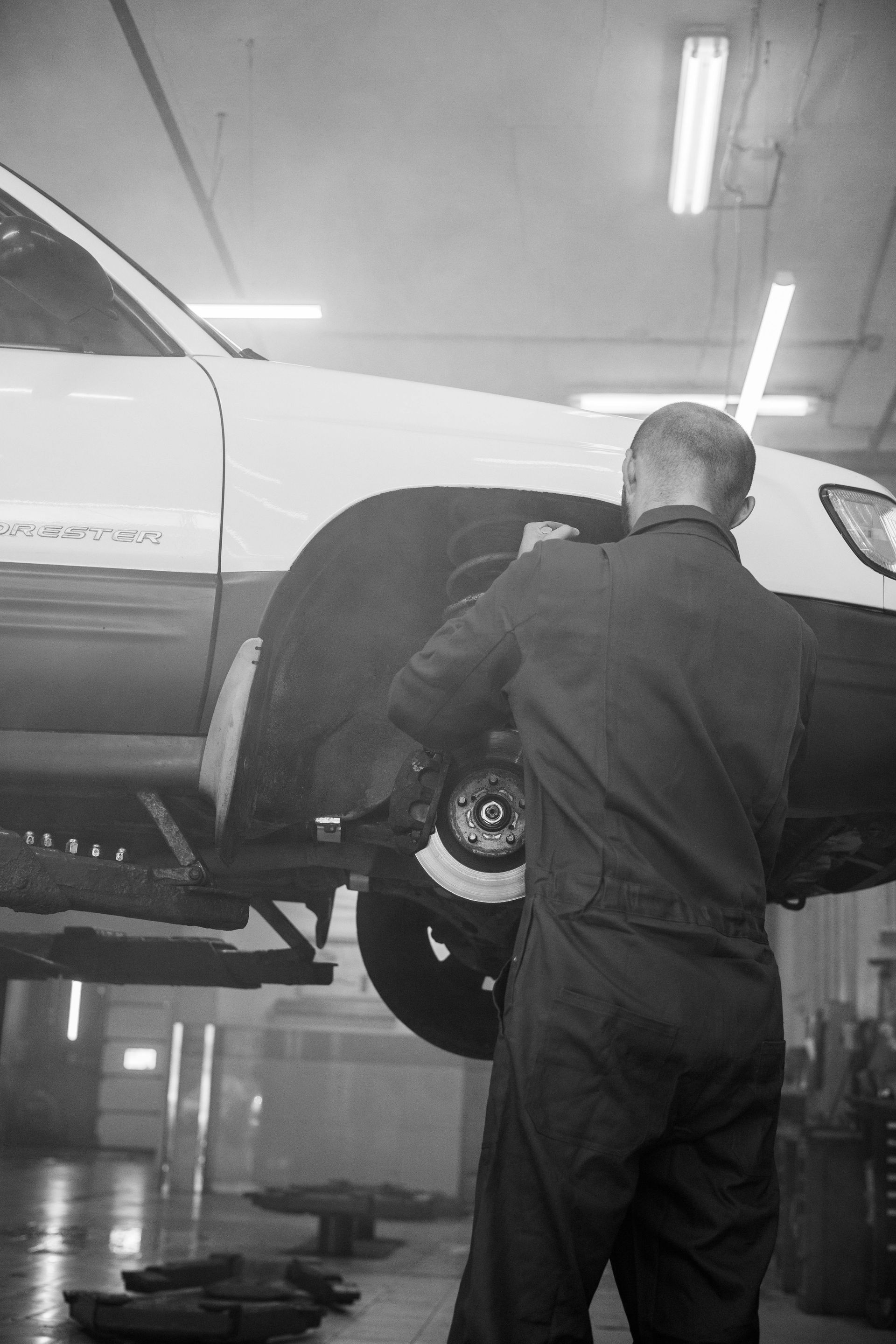
What Changes After Alignment Completes
Alignment adjustment involves loosening suspension bolts, repositioning components to bring camber and toe within specification, and verifying caster angles meet the targets that ensure stable straight-line tracking. Computerized alignment equipment measures angles in fractions of a degree, identifying deviations invisible during visual inspection but significant enough to cause tire scrubbing and fuel efficiency loss. The adjustments return wheels to parallel tracking and perpendicular road contact so each tire rolls without side resistance.
You immediately notice the steering wheel centers itself during straight driving, the vehicle no longer drifts toward one lane edge, and highway cruising requires less constant correction to maintain your intended path. Tire wear patterns shift from aggressive edge wear to even tread consumption, extending the lifespan of your current tires and delaying replacement. Fuel efficiency improves because tires roll freely rather than dragging sideways with every rotation, reducing the energy required to maintain speed.
Alignment does not correct problems caused by worn steering or suspension parts, so technicians often identify ball joints, tie rod ends, or control arm bushings that require replacement before alignment settings hold properly. Rough roads and seasonal freeze-thaw cycles common to the region accelerate suspension wear and increase how often alignment checks become necessary.
Answers to Frequent Alignment Questions
Alignment questions usually involve recognizing symptoms, understanding when service is needed, and knowing how alignment affects tire longevity and vehicle handling.
What symptoms indicate alignment problems?
Steering wheel sitting off-center during straight driving, the vehicle pulling consistently to one side, or tires showing uneven wear on inner or outer tread edges all signal alignment drift.
How do potholes affect wheel alignment?
Impacts shift suspension components enough to change camber and toe angles, causing immediate steering pull and accelerated tire wear until alignment is corrected.
When should alignment be performed in Grand Junction?
After hitting significant potholes, following suspension component replacement, when installing new tires, or annually as preventive maintenance given local road conditions.
Why does proper alignment improve fuel efficiency?
Tires aligned to roll straight consume less energy than misaligned tires that scrub sideways, reducing rolling resistance and improving miles per gallon.
What prevents alignment settings from holding?
Worn ball joints, damaged control arm bushings, or bent suspension components allow alignment angles to shift even after adjustment, requiring part replacement before alignment remains stable.
Berry's Garage measures alignment angles and adjusts suspension settings to restore proper tire contact and steering response. Arrange an alignment evaluation if your vehicle drifts, pulls, or shows uneven tire wear patterns that indicate angle deviation from specification.