
Steering Support That Prevents Nose Diving
Struts in Grand Junction for clunking noises, nose diving while braking, and uneven tire wear
Struts serve dual functions in vehicle suspension, providing both damping control like shock absorbers and structural support for steering geometry that affects wheel alignment and handling precision. Clunking noises during turns, nose diving when braking, and uneven tire wear signal that strut assemblies have worn internally or mounting components have deteriorated enough to allow unwanted movement. Berry's Garage performs complete strut inspections and replacements in Grand Junction, addressing both the hydraulic damping function and the structural support role that struts provide within the suspension system.
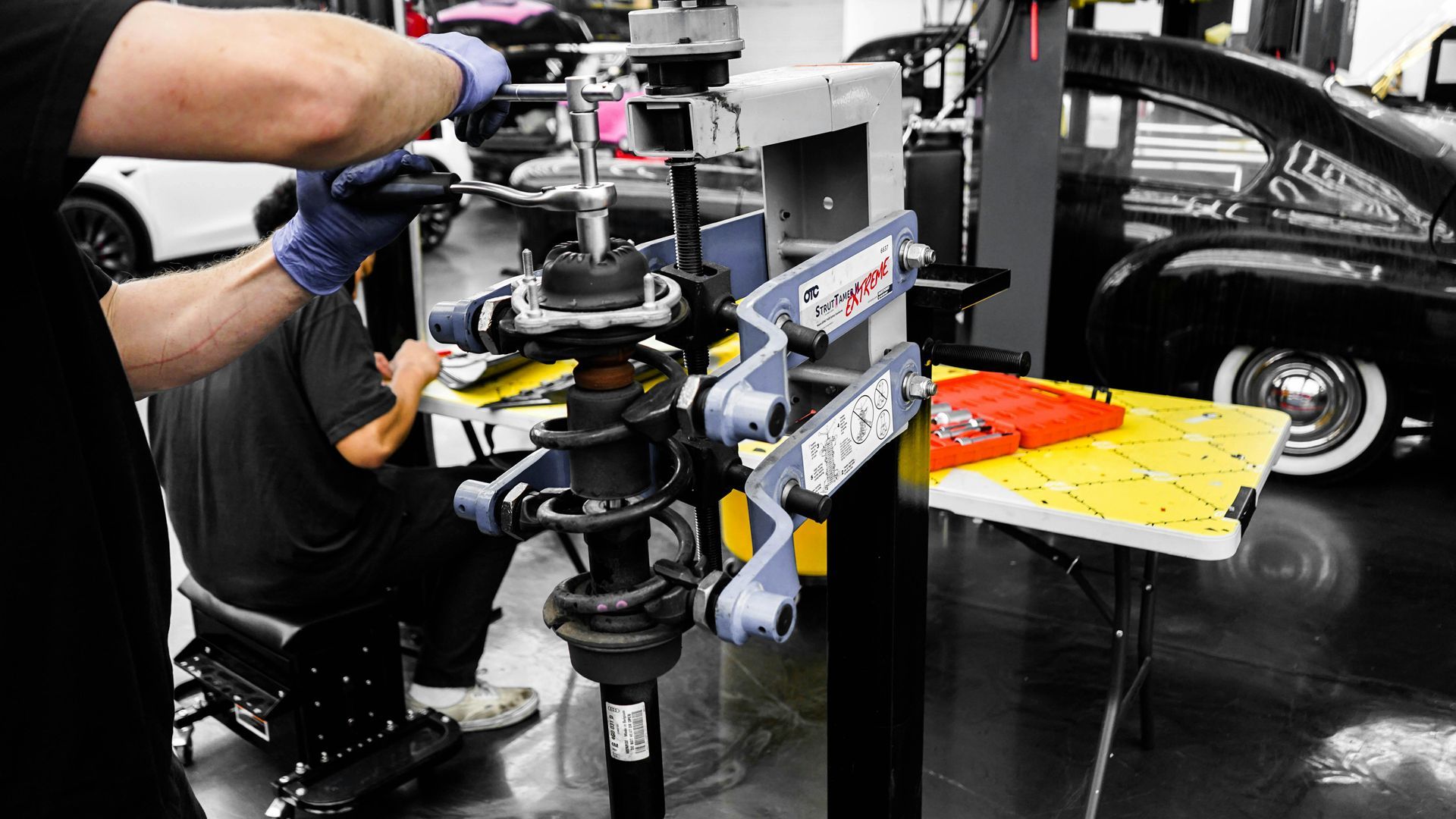
Strut replacement requires removing the entire assembly including the coil spring, mounting plate, and bearing components, then installing new units with proper alignment settings restored. Inspections evaluate damping performance, check for fluid leakage, examine mounting hardware for wear, and assess whether bearing plates still allow smooth steering rotation. Worn struts compromise steering precision because the upper mount no longer holds wheel alignment angles stable throughout suspension travel.
Schedule strut inspection during routine maintenance if steering response has become less direct or unusual noises occur over bumps.
What You Notice Once Strut Work Is Finished
Strut evaluations measure damping resistance, test bearing plate rotation, and inspect mounting hardware to determine which components within the assembly require replacement. The upper strut mount includes a bearing that allows steering rotation while supporting vehicle weight, and when this bearing fails, steering effort increases and clunking noises develop during turns. Berry's Garage replaces complete strut assemblies when internal damping has degraded, ensuring that both suspension control and steering support return to factory specifications.
You notice steering inputs produce immediate responses without the delayed or vague feel that worn struts create, and the vehicle no longer dives forward excessively when braking. Clunking noises over bumps disappear once new mounting hardware eliminates movement between the strut assembly and chassis. Tire wear becomes more uniform as wheel alignment angles remain stable throughout suspension travel instead of shifting unpredictably.
Strut service includes complete assembly replacement with new damping components, springs, and mounting hardware when inspection reveals wear, and typically requires wheel alignment afterward to restore factory steering geometry. The service focuses on suspension and steering support rather than tire replacement or brake work unless those systems show related damage.
Answers to Frequent Service Questions
Drivers considering strut work typically ask how worn components affect handling and what the replacement process involves.
Why do struts affect steering differently than shocks?
Struts incorporate the upper steering pivot point within their mounting assembly, meaning worn strut bearings or mounts directly change wheel alignment angles and steering precision.
What causes nose diving during braking when struts wear?
Worn strut damping allows front suspension to compress too quickly during weight transfer, which creates the nose-down pitch instead of controlled deceleration.
How does uneven tire wear indicate strut problems?
Worn struts allow wheel alignment angles to shift during suspension travel, creating irregular contact patches that wear tire tread unevenly across the surface.
When do struts require replacement rather than repair?
Struts require replacement when internal hydraulic seals fail or damping fluid leaks, since the sealed cartridge design prevents rebuilding individual components.
What changes after strut replacement in Grand Junction driving conditions?
Drivers notice improved control on rough secondary roads and better stability during highway lane changes, since new struts maintain consistent tire contact and steering geometry throughout suspension movement.
Berry's Garage evaluates complete strut assemblies including damping performance, bearing condition, and mounting hardware wear to identify specific failure points. Arrange an inspection if handling precision has declined or steering feels less responsive than previous operation.