
Tires Built to Handle the Road Ahead
Tire Services in Grand Junction for vehicles experiencing uneven wear, reduced traction, or vibration while driving
Berry's Garage provides tire services in Grand Junction for drivers noticing pulling, vibration, or handling changes that indicate tire wear or imbalance. Vehicles driven on highway routes and through seasonal weather shifts often develop uneven tread patterns that compromise traction and fuel efficiency. When tires lose their ability to grip pavement evenly, steering response weakens and stopping distances increase.
Tire inspections identify wear patterns caused by alignment problems, under-inflation, or suspension wear, while rotation and balancing redistribute weight to extend usable tread life. Flat tire repair addresses punctures in repairable tread areas, and replacement services install new tires matched to driving conditions and vehicle specifications. Proper maintenance directly affects how far each gallon of fuel takes you and how predictably your vehicle responds in wet or icy conditions.
Schedule a tire inspection to identify wear patterns and determine whether rotation, balancing, or replacement is needed.
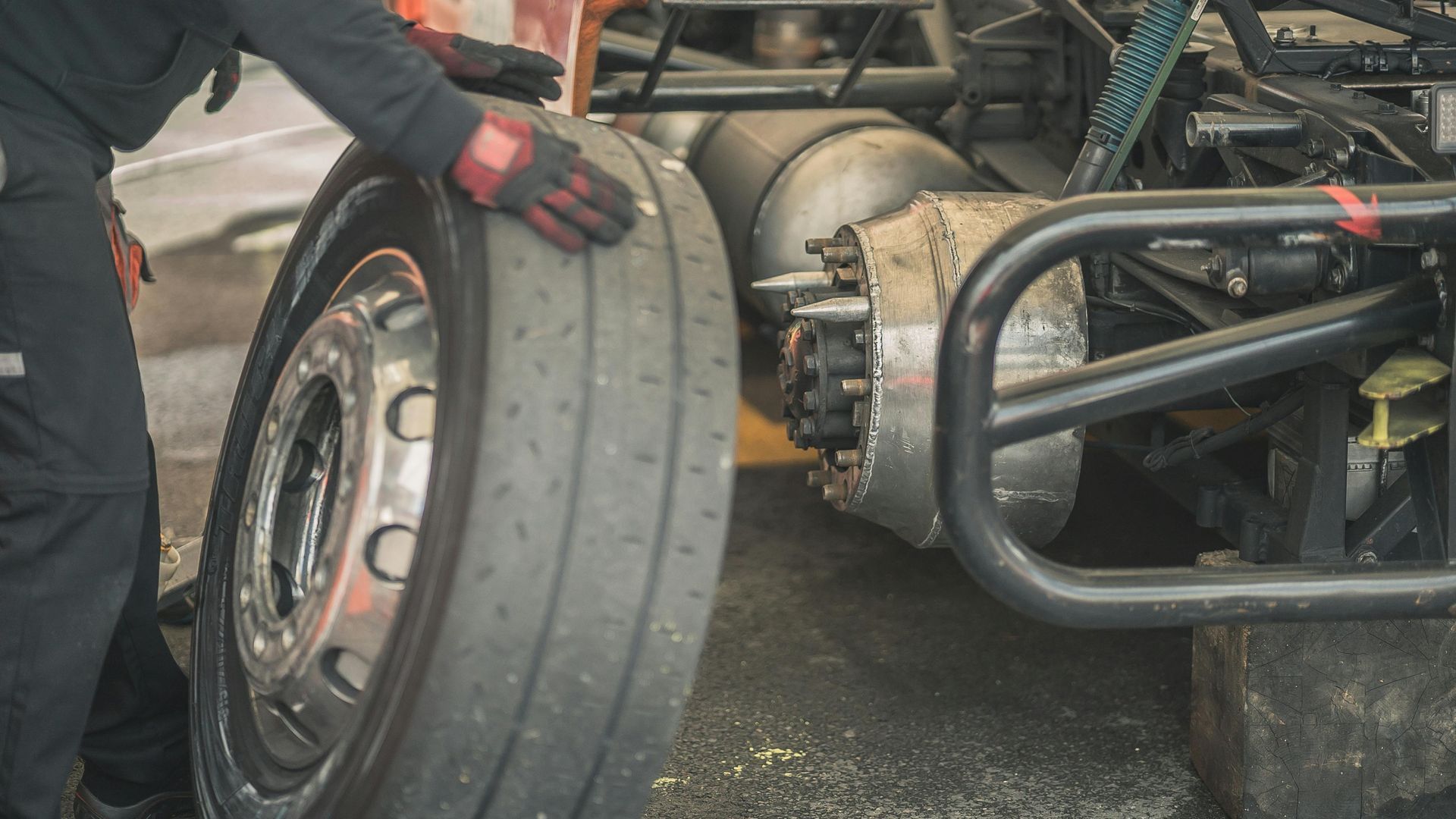
What Proper Tire Maintenance Requires
Tire rotation moves each tire to a different position on the vehicle, preventing the accelerated wear that occurs when front tires carry steering loads or rear tires bear constant drive force. Balancing corrects weight distribution around the wheel assembly, eliminating the vibration you feel through the steering wheel or seat at highway speeds. Both services work together to ensure each tire wears at the same rate and maintains consistent contact with the road surface.
After rotation and balancing, your vehicle tracks straighter without the pull caused by mismatched tread depths, and vibration at cruising speeds disappears as weight distributes evenly across all four corners. Fuel efficiency improves because tires roll with less resistance when they wear evenly, and you replace all four tires at the same interval rather than buying individual replacements as uneven wear forces early retirement.
Alignment checks often accompany tire services because suspension angles directly determine how tread contacts pavement, and even new tires wear prematurely when camber or toe settings drift out of specification. Seasonal driving conditions including snow, summer heat expansion, and rough road impact all affect how quickly tires degrade and when intervention prevents costly early replacement.
What Drivers Usually Ask About Tire Work
Tire concerns often involve recognizing when tread depth, handling changes, or visible damage require professional evaluation rather than continued driving.
What signs indicate tires need immediate attention?
Bulges, cuts in the sidewall, tread depth below 4/32 inch, or vibration that worsens with speed all require inspection before the tire fails during travel.
How does rotation extend tire life?
Moving tires between positions prevents the front-heavy wear caused by steering friction and the rear wear caused by drive torque, allowing all four tires to reach their full tread life expectancy together.
When should balancing be performed?
Any time you notice vibration through the steering wheel above 50 mph, after installing new tires, or when a wheel weight falls off during driving or impacts with potholes.
Why do tires wear unevenly in Grand Junction?
Highway driving, temperature swings between seasons, and rough pavement all contribute to wear patterns, but misalignment and improper inflation cause most premature tread loss.
What determines whether a flat tire can be repaired?
Punctures in the tread area smaller than a quarter inch typically qualify for plug-and-patch repair, while sidewall damage or large punctures require replacement because structural integrity cannot be restored.
Berry's Garage evaluates tread depth, wear patterns, and tire condition to determine whether rotation, repair, or replacement delivers the safest outcome. Arrange a tire evaluation before planned trips or when seasonal weather changes place new demands on traction and handling.